Thaumaturgical Prodigies in the New-England Canaan

I’m doing some research on the Gloucester Spectre Leaguers and have wasted SO MUCH TIME because just about every website says Cotton Mather wrote about them in Magnalia Christi Americana (1702) whereas his account is actually in the much more obscure Decennium Luctuosum (1699).

I suspect this is down to Samuel Adams Drake who put a lengthy paraphrase of Mather’s report with an erroneous reference to Magnalia Christi in his New England Legends and Folk Lore (1884). His 19th century English is much easier to read than Mather’s 17th century version, which could be responsible for people going with his account rather than the original, and perpetuating his mistake.

Always check the original sources, people!

In any case, here is what Mather had to say on the subject…


Now in the Time of that matchleſs War, there fell out a Thing at Gloſester, which falls in here moſt properly to be related: a Town ſo Scituated, Surrounded, and Neighboured, in the County of Eſſex, that no man in his Wicts, will imagine, that a Dozen French men and Indians, would come, and alarm the Inhabitants for Three weeks together, and Engage ’em in ſeveral Skirmiſhes, while there were two Regiments Raiſed, and a Detachment of Threeſcore men ſent unto their Succour, and not one man Hurt in all the Actions, & all End unaccountably. And becauſe the Relation will be Extraordinary, I will not be my ſelf the Author of any one clauſe in it; but I will Tranſcribe the words of a Miniſter of the Goſpel, who did me the Favour, with much critical Caution to Examine Witneſſes, not long after the Thing happened, and then ſent me the Following Account.

A Faithful Account of many Wonderful and Surpriſing Things, which happened in the Town of Gloceſter, in the Year, 1692.

Ebenezer Bapſon, about midſummer, in the Year, 1692. with the reſt of his Family, almoſt every Night heard a Noiſe, as if perſons were going and runing about his Houſe. But one Night being abroad late, at his Return home, he ſaw Two men come out of his Door, and run from the end of the Houſe into the Corn. But thoſe of the Family told him, there had been no perſon at all there; where upon he got his Gun, and went out in purſuit after them, and coming a little Diſtance from the Houſe, he ſaw the Two men ſtart up from behind a Log, and run into a little Swamp, ſaying to each other, The man of the Houſe is Come, now Elſe we might have taken the Houſe. So, he heard, nor ſaw, no more of them.

Upon this, the whole Family got up, and went with all ſpeed, to a Garriſon near by; and being juſt got into the Garriſon, they heard men Stamping round the Garriſon. Whereupon Bapſon took his Gun, and ran out, and saw Two men again Runing down an Hill into a Swamp. The next Night but one, the ſaid Bapſon going toward a freſh Meadow, ſaw Two men, which looked like French men, one of them having a Bright Gun upon his Back, and both runing a great pace towards him, which cauſed him to make the beſt of his way to the Garriſon, where being come ſeveral heard a Noiſe, as if men were Stamping and Running, not far from the Garriſon. Within a Night or two after this, the perſons in the Garriſon, heard a Noiſe, as if men were throwing Stones againſt the Barn. Not long after this, Bapſon, with John Brown, ſaw Three men, about a Gunſhot off the Garriſon, which they endeavoured to Shoot at, but were diſappointed by their Running to and fro, from the Corn into the Buſhes. They were feen Two or Three Nights together; but though the aboveſaid ſtrove to ſhoot at them, they could never attain it.

On July. 14. Bapſon, and Brown, with the reſt of the men in the Garriſon, ſaw within Gun-ſhot, half a dozen men whereupon all the men, but one, made Haſt out of the Garriſon, marching towards them. Bapſon preſently overtook two of them, which run our of the Buſhes, and coming cloſ to them, he preſented his Gun at them, and his Gun miſſing Fire, the Two men Returned into the Buſhes. Bapſon then called unto the other perſons, which were on the other ſide of the Swamp, and upon his call, they made Anſwer, Here they are! Here they are! Bapſon then running to meet them, Saw Three men walk ſoftly out of the Swamp by each others Side; the middlemoſt having on a white Waſt coat. So, being within Two or Three Rod of them, he Shot, and as ſoon as his Gun was off, they all fell down. Bapſon then running to his ſupposed prey, cryed out unto his Companions, whom he heard on the other ſide of the Swamp, and ſaid, He had kill’d Three! He had kill’d Three! But coming almoſt unto them, they all roſe up, and one of them Shot at him, and hearing the Bullet whyſs by him, he ran behind a Tree, and Loaded his Gun; and ſeeing them lye behind a Log, he crept toward them again, telling his Companions, they were here! So, his Companions came up to him, and they all Ran directly to the Log, with all ſpeed; but before they got thither, they ſaw them ſtart up, and run every man his way; One of them run into the Corn, whom they purſued, and hemm’d in; and Bapſon seeing him coming toward himſelf, Shot at him, as he was getting over the Fence, and saw him fall off the Fence on the Ground, but when he came to the Spot, he could not find him. So they all ſearched the Corn; and as they were ſearching; they heard a great Diſcourſing in the Swamp, but could not underſtand what they ſaid; for they ſpoke in an unknown Tongue. Afterwards, looking out from the Garriſon, they ſaw ſeveral men Skulking among the Corn, and Buſhes, but could not have a Shot at them.

The next morning, juſt at Day break, they ſaw one man come out of the Swamp, not far from the Garriſon, and ſtand cloſe up against the Fence, within Gun ſhot. Whereupon Iſsaac Prince, with a long Gun, ſhot at him with Swan-ſhot, and in a moment he was gone out of ſight, they saw him no more. Upon this, Bapſon went, to carry News to the Harbour; and being about Half a mile in his way thither, he heard a Gun go off, and heard a Bullet whyſs cloſe by his Ear, which Cut off a Pine buſh juſt by him, and the Bullet lodg’d in an Hemlock Tree. Then looking about, he ſaw Four men Running towards him, one with a Gun in his Hand, and the other with Guns on their Shoulders. So he ran into the Buſhes, and turning about, ſhot at them, and then ran away, & ſaw them no more. About Six men returned from the Harbour with him, ſearching the woods as they went; and they ſaw, where the Bullet had cut off the Pinebuſh, and where it was lodg’d in the Hemlock Tree, and they took the Bullet out, which is ſtill to be ſeen.

When they were come to the Garriſon, they went to look for the Tracks of the Strange men, that had been ſeen, and ſaw ſeveral Tracks; and whilſt they were looking on them, they ſaw one, which look’d like an Indian, having on a Blue coat, and his Hair Ty’d up behind, Standing by a Tree, and looking on them. But as ſoon as they ſpake to each other, he ran into a Swamp, and they after him, and one of them ſhot at him; but to no purpoſe. One of them alſo ſaw another, which look’d like a French man, but they quickly loſt the ſight of him.

July 15. Ezekiel Day, being in Company with ſeveral others, who were ordered to Scout the woods, when they came to a certain Freſh Meadow, two miles from any Houſe, at ſome Diſtance from the ſaid Meadow, he ſaw a man, which he apprehended to be an Indian, cloathed in Blue; and as ſoon as he ſaw him ſtart up and run away, he ſhot at him; whereupon he ſaw another riſe up a little way off, who alſo run with ſpeed; which together with the former, were quickly out of ſight; and though himſelf, together with his Companions, diligently ſought after them, they could not find them. The ſame Day, John Hammond, with ſeveral other perſons, Scouting in the woods, ſaw another of theſe Strange men, having on a blue Shirt, and white Breeches, and ſomething about his Head; but could not overtake him.

July 17. Three or Four of theſe Unaccountable Troublers, came near the Garriſon; but they could not get a ſhot at them. Richard Dolliver, alſo, & Benjamin Ellary, creeping down an Hill, upon Diſcovery, ſaw ſeveral men come out of an Orchard, walking backward and forward, and ſtricking with a flick upon John Row’s Deſerted Houſe, (the Noiſe of which, was heard by others at a Conſiderable Diſtance;) Ellary counting them, to be Eleven in all; Dolliver Shot at the midſt of them, where they stood Thickeſt, and immediately they diſpersed themſelves, and were quickly gone out of ſight.

July 18. Which was the Time, that Major Appleton ſent about Sixty men, from Ipſwich, for the Towns Aſſiſtance, under theſe inexplicable Alarms, which they had ſuffered Night & Day, for about a Fortnight together; John Day teſtifies, that he went in Company with Ipſwich and Gloceſter Forces, to a Garriſon, about Two miles and an Half, from the Town; and News being brought in, that Guns went off, in a Swamp not far from the Garriſon, ſome of the men, with himſelf, ran to diſcover what they could; and when he came to the Head of the Swamp, he ſaw a man with a Blue Shirt, and buſhy black Hair, run out of the Swamp, and into the Woods; he ran after him, with all ſpeed, and came ſeveral Times within ſhot of him; but the woods being Thick, he could not obtain his Deſign of Shooting him; at length, he was at once gone out of ſight, and when afterwards, he went to look for his Track, he could find none, though it were a low miry place, that he ran over.

About July 25. Bapſon went into the Woods, after his Cattel, and ſaw Three men ſtand upon a point of Rocks, which look’d toward the Sea. So he crept among the Buſhes, till he came within Forty yards of them; and then preſented his Gun at them, and Snap’t, but his Gun miſs’d Fire; and ſo it did above a Dozen Times, till they all Three came up towards him, walking a ſlow pace, one of them having a Gun upon his Back. Nor did they take any more Notice of him, than juſt to give him a Look; though he ſnap’d his Gun at them, all the while they walked toward him, and by him; neither did they quicken their pace at all, but went into a parcel of Buſhes. and he ſaw them no more. When he came home, he ſnap’d his Gun ſeveral Times, ſometimes with but a few Corns of Powder and yet it did not once miſs Fire. After this, there occurred several Strange Things; but now concluding they were but Spectres, they took little further Notice of them.

[Several other Teſtimonies, all to the ſame Effect, with the Foregoing, my Friend has added, which for brevity I omit; and only add, The moſt conſiderable of theſe paſſages, were afterward Sworn, before one of Their Majeſties Council.]

Reverend and truly Honoured Sir, According to your Requeſt, I have Collected a brief Account of the Occurrences, remark’d in our Town, the laſt year. Some of them are very Admirable Things, and yet no leſs True than Strange, if we may Believe the Aſſertions of Credible perſons. Tho’ becauſe of Great Haſt, it is a rough Draught, yet there is nothing written, but what the perſons mentioned, would, if duely called, confirm the Truth of, by Oath.

I might have given you a larger Account; only ſeveral who Saw and Heard ſome of the moſt Remarkable things, are now beyond Sea. However, I hope, the Subſtance of what is written, will be enough to Satisfy all Rational Perſons, that Gloceſter was not Alarumed laſt Summer, for above a Fortnight together, by real French and Indians, but that the Devil and his Agents, were the cauſe of all the Moleſtation, which at this Time befel the Town; in the Name of whoſe Inhabitants, I would take upon me, to Entreat your Earneſt Prayers to the Father of Mercies, that thoſe Apparitions may not prove, the ſad Omens of some future, and more horrible Moleſtations to them.

May 19. 1693.

SIR,

Your very Humble Servant, J. E.

NOW, Reader, albeit that paſſage of the Sacred Story, 2 Chron. 20.22. The Lord ſet Ambuſhments againſt the Children of Ammon, Moab, and Mount Seir, and they were Smitten: is by the beſt Expoſitors thus understood; That there was the Miniſtry of the Holy Angels wondrouſly Employ’d in this matter; the Angels in the Shape of Moabites and Ammonites, fell upon them of Mount Seir, and upon this apprehended provocation they then all fell upon one another, until the whole Army was deſtroyed: Nevertheless, I entirely refer it unto thy Judgment (without the leaſt offer of my own,) whether, Satan did not now Set Ambuſhments againſ the Good People of Gloceſter, with Daemons, in the Shape of Armed Indians and French-men appearing to conſiderable Numbers of the Inhabitants, and mutually Firing upon them, for the beſt part of a Month together. I know, the moſt Conſiderate Gentlemen in the Neighbourhood, unto this Day, Believe this whole matter to have been a Prodigious piece of the Strange Deſcent from the Inviſible World, then made upon other parts of the Country. And the publication of this Prodigy among other Wonders of the Inviſible World among us, ha’s been Delay’d until Now, that ſo the Opinion of our moſt conſiderate Gentlemen about it, might have Time for a thorough Concoſtion: and that the Gentlemen of the Order of St. Thomas, may have no Objection to make against it. But, be it what it will, they are not a few profane Squibs from the Sons of the Extravagant Bekker, that will be a fit Explication, for Things thus Atteſted, and ſo very Marvellous.


So – I ask – what is to be done about that?

A List of Entirely Fictional Women I am Embarrassingly Obsessed With

One of a series of posts documenting my precarious mental state for purposes of education and enlightenment.

Miranda Feigelsteen – Mysterious Ways (TV Show)
Miki – FreakAngels (Comic)
Abby Lockheart – ER (TV Show)
Lorelai Gilmore – Gilmore Girls (TV Show)
Claudia Donovan – Warehouse 13 (TV Show)
Talla Keyali – The Orville (TV Show)
Adora Belle Dearheart – Going Postal (Novel)
Abby Sciuto – NCIS (TV Show)
Susan Ptolemy – Giant Days (Comic)
Sara Sidle – CSI (TV Show)

I’m sure there are more, so I’ll add them as I think of them.

On the Palustiquendi

The Eldar named them ‘Palustiquendi’ – which is ‘Shelf Elf’ – from their habit of perching in dark and unexpected places to better their spying

The Palustiquendi are the descendants of escapees from the hellish chambers within which Morgoth created the first orcs from captured Elves long before the rising of the sun. Although appearing much as other Elves – Morgoth not having wrought much harm upon their bodies – their minds were twisted by his sorceries long ere their escape, rendering them scheming, suspicious, and duplicitous, quick to anger and fast to seek power by the accusation of others. Indeed, some believe the Palustiquendi did not escape, but were released by Morgoth to serve as spies and agents among the Elves, although any such scheme was doomed, as the ignoble behaviour of these piteous wretches swiftly marked them out among any untainted Eldar they encountered.

The Palustiquendi were all but wiped out during the War of the Jewels in the First Age, with few – if any – surviving the destruction of Beleriand in the War of Wrath. Legends persist however – even unto the present day – of these foul and treacherous creatures pledging their questionable allegiance to those desperate for spies and informants.

Your love for the Halfling’s Leaf has clearly slowed your Mind

You ever read The Silmarillion, man? You ever read The Silmarillion ON PIPEWEED? Oh, there’s some weird shit there man! There’s a hobbit sitting in the bushes, man! Has he got the Ring? I dunno!! FORTH EORLINGAS!! RIDE TO RUIN AND THE WORLD’S ENDING!!

In all seriousness, pipeweed is actually just tobacco.

The Haunted Elf’s House

In the middle of my shower this morning I suddenly realised that the Crone World sequence from Gav Thorpe’s Path of the Outcast (the third in his Path of the Eldar series) absolutely must have been influenced by M.R. James’ The Haunted Doll’s House.

The Haunted Doll’s House (written for the library of Queen Mary’s Doll’s House) concerns – unsurprisingly – a doll’s house that replays a ghostly vision of a murder and its consequences. You can read the whole thing here – which I strongly advise you to do as it’s one of my favourite of James’ works – but the important elements for our purposes are that a couple with two young children murder a frail old man in his bed before he can alter his will to cut them out…

It was time to look at that upper window. Through it was seen a four-post bed: a nurse or other servant in an arm-chair, evidently sound asleep; in the bed an old man lying: awake, and, one would say, anxious, from the way in which he shifted about and moved his fingers, beating tunes on the coverlet. Beyond the bed a door opened. Light was seen on the ceiling, and the lady came in: she set down her candle on a table, came to the fireside and roused the nurse. In her hand she had an old-fashioned wine bottle, ready uncorked. The nurse took it, poured some of the contents into a little silver saucepan, added some spice and sugar from casters on the table, and set it to warm on the fire. Meanwhile the old man in the bed beckoned feebly to the lady, who came to him, smiling, took his wrist as if to feel his pulse, and bit her lip as if in consternation. He looked at her anxiously, and then pointed to the window, and spoke. She nodded, and did as the man below had done; opened the casement and listened – perhaps rather ostentatiously: then drew in her head and shook it, looking at the old man, who seemed to sigh.

By this time the posset on the fire was steaming, and the nurse poured it into a small two-handled silver bowl and brought it to the bedside. The old man seemed disinclined for it and was waving it away, but the lady and the nurse together bent over him and evidently pressed it upon him. He must have yielded, for they supported him into a sitting position, and put it to his lips. He drank most of it, in several draughts, and they laid him down. The lady left the room, smiling good night to him, and took the bowl, the bottle and the silver saucepan with her. The nurse returned to the chair, and there was an interval of complete quiet.

Suddenly the old man started up in his bed – and he must have uttered some cry, for the nurse started out of her chair and made but one step of it to the bedside. He was a sad and terrible sight – flushed in the face, almost to blackness, the eyes glaring whitely, both hands clutching at his heart, foam at his lips. For a moment the nurse left him, ran to the door, flung it wide open, and, one supposes, screamed aloud for help, then darted back to the bed and seemed to try feverishly to soothe him – to lay him down – anything. But as the lady, her husband, and several servants, rushed into the room with horrified faces, the old man collapsed under the nurse’s hands and lay back, and his features, contorted with agony and rage, relaxed slowly into calm.

In Path of the Outcast the focus character – Aradryan – joins an expedition to an ancient, abandoned palace on a Crone World in the Eye of Terror. He soon finds himself beguiled by ghostly visions of the Eldar who once lived there…

Before he even realised what he was doing, Aradryan was beside the bed, stroking a hand across the silk-like covers. He did not need to sleep, he told himself as he turned and sat down on the edge of the bed. He would just sit here for a few moments, recharging his strength. He could see why such a place had been constructed; from the bed the sea seemed to come right up to the window, its wordless voice urging him to close his eyes and relax.

Aradryan most definitely did not sleep. He did not even close his eyes, and stayed sat on the edge of the bed staring out at the alien sea. Despite being very obviously awake, the ranger started to notice that things were becoming decidedly dream-like. For a start, his waystone was gleaming gold and hot to the touch when he lifted his fingers to it. On top of that, he was not alone on the bed. He did not dare turn around, but he could feel the presence of someone else behind him, their weight on the mattress.

Delicate music tinkled in the distance, soothing and quiet, echoing along the empty corridors and across abandoned rooms. Except the corridors and rooms were not empty and abandoned. The figures of eldar moved around the apartment, several of them gathering by the window in front of Aradryan, holding hands with each other as they looked out across the waves as darkness descended. They were a family, two small girls with their mother and father. The person behind Aradryan called out a series of names and the family turned with smiles, the children breaking free to run to the bed. One of them leapt onto the mattress, passing straight through Aradryan.

Bolting to his feet, Aradryan turned to look at the ghosts. The eldar from the portraits, eyes lined with greater age, lay beneath the covers, which were rucked back to reveal his thin shoulders and shallow chest.

The music had stopped, and the small girl who had leapt onto the bed was not smiling any more. Her tiny hands were at the old noble’s throat, and there were shouts and rings of metal from across the palace grounds. Old scores were being settled, the extended families dividing into factions, sectarian violence erupting between them to decide who should inherit the luxurious planet-manse.

[…]

Behind the aristocratic-looking eldar, the girl on the bed had finished strangling the old noble and was pulling the heavy rings from his fingers, while her sister had joined her and was using a knife to cut his hair, pulling free gemstones from the bindings thus freed.

So, in both stories we have a haunted building that produces visions of an old man being murdered in his bed by his heirs (including two children) over a disputed inheritance. Thorpe’s version is more shocking – which is only to be expected when dealing with pre-Fall Eldar who were downright horrid – but the story elements are exactly the same.

I am amazed it took me this long to notice the similarity, given my fondness for both the James story and the Crone World sequence. I guess if you’re going to borrow, borrow from the best!

Lesser Known British Crime Solvers

Inspector Borse: Only solves murders in European stock exchanges.

Inspector Corse: The mouth on that man!

Inspector Force: Surprisingly gentle.

Inspector Gorse: Spends most of his time tramping around the moors.

Inspector Horse: The result of some misfiled paperwork at the Police mounted division.

Inspector Norse: Depressed, brooding and fond of drinking mead from a horn.

Inspector Sorce: Has a side job as a Sous-Chef

Inspector Worse: Ask for anyone else. Seriously.

Inspector Semaphore: We don’t talk about him.

Piranesi Like Sunday Morning

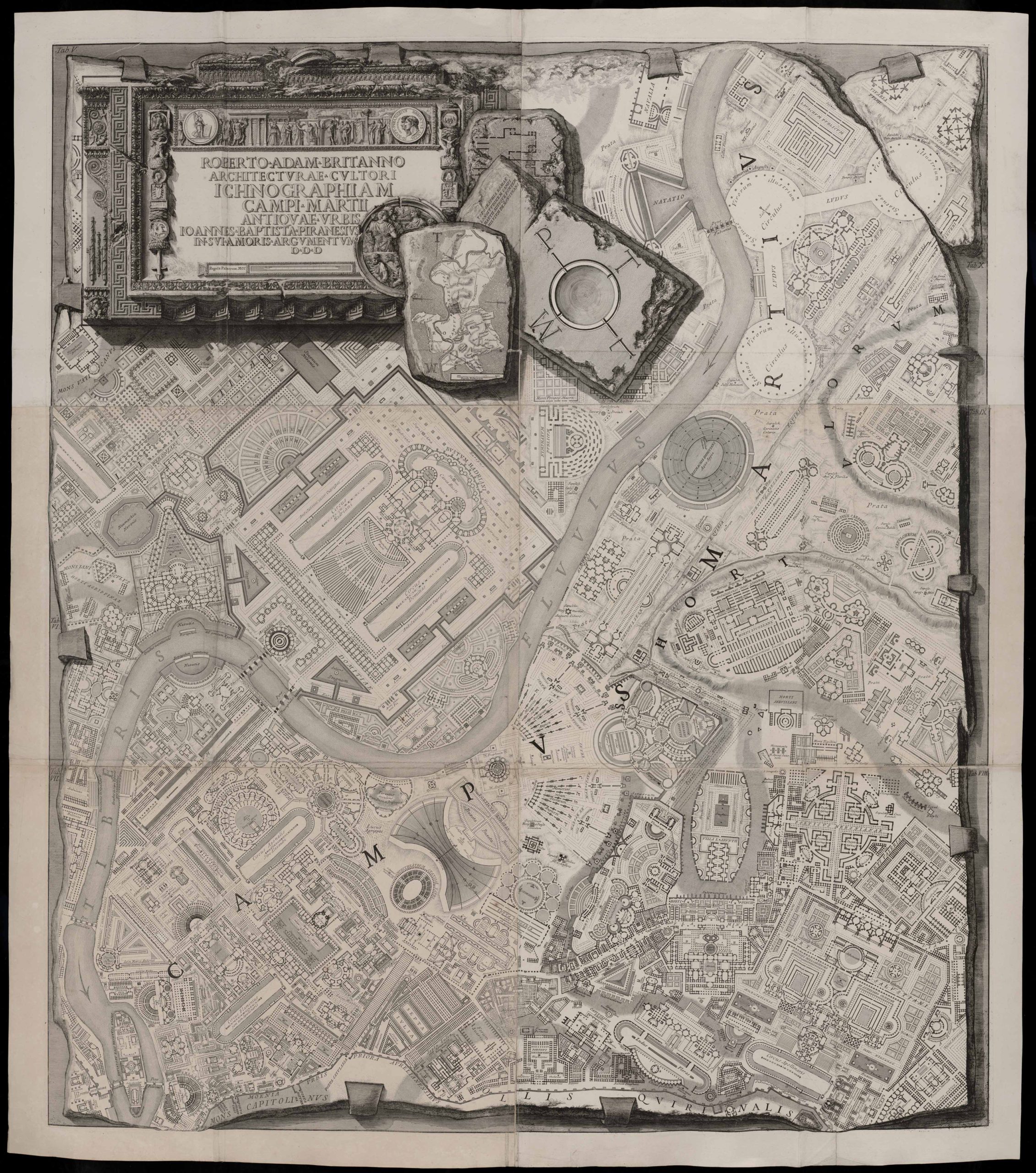
History records that the psychedelic properties of LSD were discovered by Albert Hoffman in 1943, but anything more than the briefest glance at Piranesi’s Il Campo Marzio dell’antica Roma (The Campus Martius of Ancient Rome) suggests that some kind of extremely potent acid must have circulating among Italian antiquarians back in the 1760s.

Circus Domitiae? What even IS this?

In producing his map of ancient Rome the artist, architect and antiquarian Giovanni Battista Piranesi (1720-1778) did an incredible job of tracking down, measuring and plotting structures that still stood in his day, then backed up his on-site research with meticulous trawling through ancient (and not so ancient – he straight up plagiarised some stuff from other antiquarians) documents for further info. Having done all that however he proceeded to fill in the blanks with the wildest, most hallucinatory, architectural bat-shittery imaginable, transforming Rome from a city where people actually lived and worked into a vast field of palaces, monuments, circuses, gardens, canals, lakes and god-knows what else. He even left off a few real features (where the hell is the Via Lata?) to make room for his architectural fever-dreams. It’s not a historical reconstruction, it’s an Imperial Disneyland with Marcus Mouse and Domitian Duck.

All that said, we shouldn’t be too harsh on him. Archeology as we understand it didn’t exist in the 1700s, and Piranesi was – above all else – a guy trying to earn a living. A map with big blank areas would be far less likely to attract the interest of a wealthy Grand Tourist than one full of fascinating – albeit entirely fictional – detail. It also cannot be denied that the piece is magnificent. I’d happily display it on my wall despite its historical shortcomings.

An interesting footnote is that there are two versions of the map. Piranesi actually went back and edited his depiction of the circuses, shortening the central spina (spinae? I really must brush up on my Latin plurals…) and replacing his straight depiction of the starting gates (the carceres) with curved ones. This was apparently down to evidence from the spectacularly well preserved Circus of Maxentius on the Appian Way south of Rome. Clare Hornsby delivered an interesting lecture on the subject at the English School in Rome back in 2022 which can be viewed here on YouTube.

And of course the whole thing was inspired by the Forma Urbis Romae – the incredibly detailed map of the city carved into marble slabs around 205 AD. This covered central Rome at such a level of detail that the floor plans of individual buildings – including features such as pillars and staircases – were included, and it was all clearly labeled with street and building names.

Such an incredible historical resource could – of course – not be permitted to survive and the majority of it was burned to make lime in the middle ages. About 10% of it survives in the form of thousands of fragments, and archeologists have been trying to fit them back together for the last few centuries in the most frustrating game of jigsaw ever devised.

Through such seas of ignorance, archeology splashes on!

Khahali Khuzd re Khafeleki Tûm

It’s been unreasonably hot of late (maximums hovering around 40° for the last three days), which means that I’ve found it rather difficult to sleep. I’ve tried what I often do under such circumstances which is to stay up watching weird, late night TV until I can barely form a coherent thought (La Brea seems interesting, at least when horribly sleep deprived) then crawl into bed in the hopes of passing out, but it never actually works, so I’ve spent much of the last few nights tossing and turning while my brain whirls away like a merry-go-round with a broken speed governor.

(Do merry-go-rounds have speed governors? Is a speed governor even a thing? You can tell I’m not all here can’t you?)

Anyway, as I was writing in mental and physical torment last night my brain spat up a really silly idea, which was to attempt a translation of everyone’s favourite Dwarf song – Diggy Diggy Hole – into Khuzdul, the language of J. R. R. Tolkien’s Dwarves.

What do you mean you don’t know Diggy Diggy Hole?! What have you been doing with your life?! Here’s Wind Rose’s version to get you up to speed.

Anyhoo, translating it isn’t quite as crazy as it seems because we don’t really know a lot about Khuzdul words and grammar – which gives me plenty of scope to just make things up!

So I looked up what scraps of the language we actually have, and threw in the Neo-Khuzdul lyrics of The Bridge of Khazad-dûm from the Lord of the Rings soundtrack which helpfully provides a basic grammar and a number of words found in Diggy Diggy Hole despite being wildly different in tone.

And here it is! The first verse and chorus of Diggy Diggy Hole translated into what we might call Neo-Neo-Khuzdul…


FELEKA TÛM

Gûza mêngalaribarâ!
Mênfelakarâ khul!
Mêntakarâ felak lamâ!
Mênorodalarâ khul!
Mâsalani buzra zar
Mak tabandi bazanar
Gilim samil, zigil, nim
Abilul sanzigil bin
!

Mâbala ni buzra
Kûman taranasha mâ
Mâzikada ni aznân
Suruk ni kathalamâ
Paragul kurdumâ
Sanbaragul bishkumâ!
Feleka tamahaldi rûza
Mênorodalarâ gûza!

Khahali Khuzd
Ra khafeleki tûm!
Khafeleki tûm!
Khafeleki tûm!

Khahali Khuzd
Ra khafeleki tûm!
Khafeleki tûm!
Feleka tûm!


Translated back to English…

DIGGING A HALL

Brothers you will rejoice!
Dig with me!
Use our tools and voices!
Sing with me!
Deeper and deeper we go,
No one knows what lies beneath,
Shining gems, silver, gold,
Mithril hidden deep
!

We were born underground,
Nourished by stone,
We grew in the dark,
Secure in our mountain stronghold,
Our skin is iron,
Our bones are steel,
Digging makes us free,
Brothers sing with me!

I am a Dwarf,
And I’m digging a hall,
I’m digging a hall,
I’m digging a hall,

I am a Dwarf,
And I’m digging a hall,
I’m digging a hall,
Digging a hall,


And finally for those who care about such things, a line by line gloss…

Gûza mêngalaribarâ
all-brothers you-celebrate-imperative
Brothers you will rejoice!

Mênfelakarâ khul
you-delve-imperative me-with
Dig with me!

Mêntakarâ felak lamâ
you-use-imperative tool voices-our
Use our tools and voices!

Mênorodalarâ khul
you-sing-imperative me-with
Sing with me!

Mâsalani buzra zar
We-descend-are deeps more
We go deeper and deeper

Mak tabandi bazanar
No-one it-know-are below-things
No one know what lies below

Gilim samil, zigil, nim
Shining gems, silver, gold

Abilul sanzigil bin
hidden true-silver beneath
Mithril hidden below

Mâbala ni buzra
we-born-were in deeps
We were born underground

Kûman taranasha mâ
stone it-nourish-did us
Nourished by stone

Mâzikada ni aznân
we-grow-did in darkness
We grew in the dark

Suruk ni kathalamâ
secure in mountain-stronghold-our
Secure in our mountain stronghold

Paragul kurdumâ
iron-of skin-our
Our skin is iron

Sanbaragul bishkumâ
true-iron skeletons-our
Our bones are steel

Feleka tamahaldi rûza
To-dig it-create-does freedom
Digging creates freedom

Mênorodalarâ gûza!
you-sing-imperative all-brothers
All brothers sing!

Khahali Khuzd
me-be-am dwarf
I am a dwarf

Ra khafeleki tûm
and me-dig-am underground-hall
And I’m digging a hall

Khafeleki tûm
me-dig-am underground-hall
I’m digging a hall

Khafeleki tûm
me-dig-am underground-hall
I’m digging a hall

Khahali Khuzd
me-be-am dwarf
I am a dwarf

Ra khafeleki tûm
and me-dig-am underground-hall
And I’m digging a hall

Khafeleki tûm
me-dig-am underground-hall
I’m digging a hall

Feleka tûm
to-dig underground-hall
To dig a hall


So there you go. I’m done for the day. Mênmahaldarâ lara! (make your own entertainment)

Tiffany in Gilead

For years now there’s been a post rattling around in my head on the subject of how both literalist American fundamentalists and angry American atheists suffer from a complete misunderstanding of what the Bible actually is, but I can never seem to find the time to write it up. It’s very interesting and includes unicorns, so keep an eye out for it. In the meantime though I’ve been thinking about the particular instance of the Tiffany Problem as found in the historical books of the Old Testament.

(You don’t know about the Tiffany Problem? Put briefly it’s that there are things that are actually really, really old, but which seem so modern that if you include them in a historical work it looks like a mistake. Like the name “Tiffany” which dates from the 12th century, but would completely freak people out if used in a film about, say, Henry VIII.)

Western society (for better or worse) has been massively influenced by the Bible, and as a result a lot of names we assume are perfectly ordinary, modern names are actually taken from it. This means that if you’re reading one of the Old Testament history books (which you should – they’re filled with enough bizarre events, weird claims and insane, gory violence to put Game of Thrones to shame) you get this exhilarating mental whiplash effect…

…And so KING GABILGATHOL did marry the eldest daughter of JERABOSOPHAT, “abigail”, and she bore unto him a son he named IGLISHAMEK for he was like unto the thunder of the mountains, and IGLISHAMEK was blessed by the HIGH PRIEST ZIRAK-ZIGIL and the Prophet “nathan”

Seriously, there’s a prophet named “Nathan” in there, which is the kind of name you’d usually associate with a guy who spends all his spare time playing darts down the pub.

Anyway, that’s all I had to say.